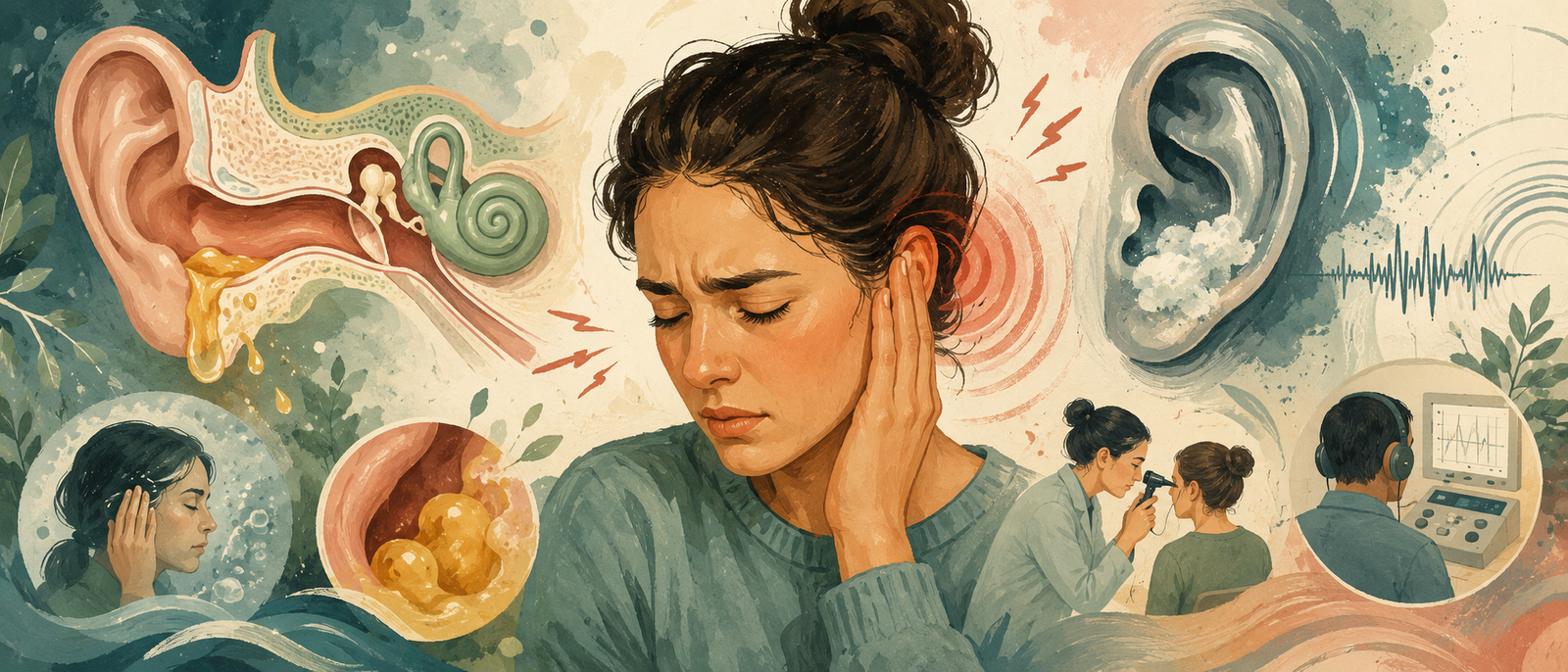
Ear pain, infection and a blocked-ear feeling are common problems in both children and adults. Sometimes the cause is a mild infection or earwax build-up that improves with simple care. In other situations, persistent pain, discharge, hearing loss or dizziness may need examination by an ENT specialist.
Many patients search for an “ear doctor near me,” “ear infection treatment,” “ear pain doctor” or “ear blockage doctor” when discomfort suddenly starts or does not improve. However, similar symptoms can occur for different reasons, and the correct treatment depends on which part of the ear is affected.
An ear infection may involve the outer ear canal or the space behind the eardrum. A blocked ear may be caused by wax, fluid, congestion after a cold, pressure changes or another hearing-related condition. Pain may even come from the throat, jaw or teeth rather than the ear itself.
Understanding the likely cause, warning signs and expected recovery time can help you decide whether to monitor the problem, consult a general physician or visit an ENT specialist.
What Can Cause Ear Pain or Blockage?
Ear pain does not always mean there is an infection. The ear contains several delicate structures, and discomfort may arise from the outer ear, middle ear, eardrum or nearby areas.
Common causes include:
Middle Ear Infection
A middle ear infection, medically called acute otitis media, develops behind the eardrum. It often occurs after a cold or other respiratory infection and is more common in children.
Fluid and inflammation behind the eardrum may cause pain, fever, irritability, disturbed sleep and temporary muffled hearing. Young children may pull at their ear, cry more than usual or have difficulty feeding.
Many mild childhood middle ear infections improve within a few days, although symptoms may sometimes last for up to a week. Antibiotics are not automatically required for every ear infection; the decision depends on age, symptoms, examination findings and risk of complications.
Outer Ear Infection
An outer ear infection, also known as otitis externa or swimmer’s ear, affects the ear canal. It may develop after water remains inside the ear, after scratching the canal or after using cotton buds or other objects.
Pain may become worse when the outer ear is touched or pulled. The ear canal may feel swollen or itchy, and there may be discharge. Treatment can be different from treatment for a middle ear infection, so examination is important.
Earwax Build-Up
Earwax protects the ear canal, but excessive or impacted wax may cause:
- A blocked or full sensation
- Reduced or muffled hearing
- Earache
- Ringing or buzzing
- Occasionally dizziness
Trying to remove wax with cotton buds, hairpins or other objects can push it deeper and may injure the canal or eardrum. Ear candles and unregulated ear-cleaning devices are also not considered reliable ways to remove wax.
Fluid Behind the Eardrum
Fluid can remain behind the eardrum after a cold or ear infection even when there is no active infection. This is sometimes called glue ear or otitis media with effusion.
It may cause a blocked feeling, popping sounds or temporary hearing difficulty. In children, persistent hearing difficulty can affect attention, communication, school performance or speech development. The fluid often clears naturally, but persistent symptoms may need hearing assessment and ENT evaluation.
Eustachian Tube Dysfunction
The Eustachian tube connects the middle ear to the back of the nose and helps equalise pressure. It can become temporarily blocked during a cold, nasal allergy, sinus problem, air travel or rapid altitude change.
This may cause pressure, popping, fullness or muffled hearing. The symptoms often improve when the underlying congestion settles, but prolonged or one-sided blockage should be examined.
Referred Pain From the Jaw, Teeth or Throat
The ear shares nerve pathways with the jaw, teeth and throat. Dental infection, jaw-joint problems, tonsillitis or throat inflammation can therefore feel like ear pain even when the ear itself appears normal.
If an ear examination does not show a clear problem, the doctor may assess these nearby areas.
Common Symptoms of an Ear Infection
The symptoms depend on the type of infection and the patient’s age. Common symptoms include ear pain, pressure, fever, irritability, disturbed sleep, reduced hearing and fluid coming from the ear.
In young children, possible signs include repeated ear pulling, crying, reduced feeding, difficulty sleeping or becoming unusually unsettled. These symptoms are not specific to ear infection, so the eardrum should be examined before treatment is decided.
Adults may experience a deep ache, pressure behind the eardrum, muffled hearing or discomfort after a cold. Pain that becomes worse when touching the outer ear may suggest an outer ear canal problem.
Ear Infection, Wax or Pressure: How Can You Tell the Difference?
It is difficult to identify the cause with certainty without looking inside the ear. However, the pattern of symptoms may provide clues.
Earwax commonly causes gradual blockage or reduced hearing and may not cause fever. A middle ear infection often follows a cold and may cause deeper pain, fever or temporary hearing reduction. An outer ear infection may cause itching, discharge and pain when the outer ear is moved.
Pressure-related blockage may begin during air travel, after a respiratory infection or alongside nasal congestion. Sudden hearing loss, however, should not be assumed to be simple wax or pressure and needs prompt medical assessment.
An ENT specialist may examine the ear canal and eardrum using an otoscope or microscope. Hearing tests or pressure tests may be advised when hearing loss, persistent fluid or recurrent symptoms are present.
Can a Mild Ear Infection Improve Without Antibiotics?
Some mild middle ear infections, particularly in children, improve as the immune system clears the infection. Many children begin to feel better within approximately three days without antibiotics.
This does not mean every ear infection should be managed at home. Antibiotics may be considered when symptoms are severe, continue beyond the expected period, worsen rapidly, occur in a high-risk patient or are associated with certain examination findings.
Antibiotics do not treat earwax, pressure-related blockage or every viral infection. Taking them without medical advice can cause side effects and contribute to antibiotic resistance.
The safest approach is to let a qualified doctor determine whether the problem is bacterial, viral, wax-related or due to another cause.
What Can You Do for Mild Ear Pain While Waiting for Medical Advice?
For mild discomfort, rest and appropriate pain relief may help while the symptoms are monitored. Paracetamol or ibuprofen may be suitable for some patients when taken in the correct dose, but they may not be appropriate for everyone.
Patients with kidney disease, stomach ulcers, liver disease, bleeding problems, allergies, pregnancy or other medical conditions should check with a doctor or pharmacist before taking medicines. Children must receive an age- and weight-appropriate dose, and aspirin should not be given to children.
Keep the ear dry if there is suspected infection or discharge. Do not insert cotton buds, matchsticks, keys, fingers or any other object into the ear canal.
Do not put oil, unprescribed drops or other substances into the ear if there is discharge, bleeding, previous ear surgery, an ear tube or a suspected eardrum perforation unless a doctor has advised it.
When Should You Visit an ENT Specialist?
Most uncomplicated ear problems may first be assessed by a general physician or paediatrician. However, an ENT specialist has specific training in diseases of the ear, hearing and balance system.
Consider visiting an ENT specialist if:
- Ear pain is severe, persistent or repeatedly returns
- Ear infections occur frequently
- A blocked-ear feeling does not improve
- Hearing remains reduced after an infection
- Fluid or pus repeatedly comes from the ear
- There is ringing, dizziness or imbalance
- Earwax cannot be safely cleared
- There may be a perforated eardrum
- A foreign object is stuck in the ear
- A child has persistent fluid or hearing difficulty
- Symptoms affect only one ear for a prolonged period
- Previous treatment has not resolved the problem
People searching for an ear specialist near them should prioritise a proper examination rather than repeatedly trying home remedies. Persistent symptoms may need ear cleaning under direct vision, hearing assessment, medication or further investigation depending on the diagnosis.
When Does Ear Blockage Need Medical Examination?
A temporary blocked-ear feeling during a cold or flight may improve naturally. However, medical examination is advisable when the blockage lasts, repeatedly returns or is accompanied by pain, discharge, dizziness or hearing reduction.
An ear blockage doctor or ENT specialist can determine whether the cause is wax, infection, fluid behind the eardrum, pressure dysfunction or another ear condition.
Wax may sometimes be softened before professional removal, but this should be avoided when there is possible eardrum damage, discharge, previous surgery or significant pain. Professional removal methods may include microsuction, careful instrumentation or irrigation when clinically suitable.
Do not keep inserting cotton buds to “clean” a blocked ear. This commonly pushes wax further inside and can injure the ear canal.
Ear Discharge Should Not Be Ignored
Fluid coming from the ear may be watery, yellow, white, blood-stained or foul-smelling. It can occur with an outer ear infection, a perforated eardrum, chronic middle ear disease or injury.
Ear discharge accompanied by pain, bleeding, reduced hearing or dizziness needs medical assessment. An ENT doctor may carefully clean the canal, examine the eardrum and select treatment based on the cause.
Avoid using leftover antibiotic drops because some drops may not be suitable when the eardrum is perforated.
Hearing Difficulty After an Ear Infection
Temporary muffled hearing can occur when fluid remains behind the eardrum after an infection. It may gradually improve as the fluid clears.
However, persistent hearing loss should be assessed, particularly when it affects only one side, appears suddenly or interferes with communication. In children, reduced hearing may present as inattentiveness, delayed responses, increased television volume or speech-development concerns.
A hearing problem doctor or ENT specialist may recommend an audiogram, tympanometry or another hearing assessment depending on the symptoms.
Sudden hearing loss is different from gradual muffled hearing and should be treated as urgent.
Ear Infections in Children
Children develop middle ear infections more frequently because their Eustachian tubes are shorter and more easily blocked.
Parents should arrange medical evaluation when a child has persistent pain, fever, discharge, reduced hearing or worsening symptoms. A baby younger than three months with a temperature of 38°C or above should receive prompt medical attention.
Repeated infections or persistent fluid may require an ENT consultation, especially when hearing, speech, sleep or school performance is affected.
Parents should not use adult ear medicines, leftover antibiotics or unprescribed ear drops in children.
Common Myths About Ear Infection and Blockage
Every ear infection needs antibiotics.
Fact: Some middle ear infections improve without antibiotics. Treatment depends on the patient’s age, severity, duration, examination findings and risk factors. Antibiotics should be used only when prescribed.
Cotton buds safely remove earwax.
Fact: Cotton buds often push wax deeper into the ear and may scratch the canal or damage the eardrum. The ear canal usually cleans itself naturally.
A blocked ear is always caused by wax.
Fact: Blockage can also result from fluid behind the eardrum, infection, nasal congestion, Eustachian tube dysfunction or a hearing-related condition.
If ear pain stops, the problem is completely resolved.
Fact: Pain may improve while fluid, reduced hearing or an eardrum problem remains. Follow-up may be needed when blockage or hearing loss continues.
Any available ear drop can be used for pain or discharge.
Fact: Ear drops are selected according to the diagnosis and condition of the eardrum. Some products may be unsuitable when there is a perforation, previous surgery or ear discharge.
Ear candles can safely remove wax.
Fact: Ear candles have not been shown to reliably remove earwax and may cause burns or injury.
When to Seek Urgent Medical Attention
Seek urgent medical assessment rather than waiting for a routine appointment if ear symptoms include:
- Sudden or rapidly worsening hearing loss
- Severe dizziness, vertigo or difficulty walking
- Facial weakness or drooping
- Swelling, redness or severe tenderness behind the ear
- Pus, blood or persistent fluid coming from the ear
- Severe pain with high fever or marked weakness
- Severe headache, neck stiffness, confusion or repeated vomiting
- Ear injury, head injury or suspected eardrum rupture
- A battery, sharp object or other foreign body inside the ear
- Rapid worsening in a patient with diabetes or reduced immunity
- A baby below three months with a fever of 38°C or higher
Pain, active drainage, bleeding, sudden hearing loss and recurrent dizziness are recognised warning signs requiring medical evaluation.
Do not wait for a routine ENT appointment if the person appears seriously unwell. Visit the nearest emergency department.
How an ENT Specialist Evaluates Ear Pain or Blockage
The consultation usually begins with questions about when the symptoms started, whether one or both ears are affected and whether there is fever, discharge, hearing loss, dizziness, recent swimming, a cold, air travel or ear injury.
The doctor examines the ear canal and eardrum. Wax, inflammation, swelling, fluid, perforation or discharge may be visible during this examination.
Depending on the findings, additional tests may include:
- Pure-tone hearing assessment
- Tympanometry to assess middle-ear pressure
- Microscopic ear examination
- Discharge testing in selected persistent infections
- Imaging when complications or deeper disease are suspected
Not every patient needs every test. The investigation plan depends on the clinical findings.
Ear Infection Treatment Depends on the Cause
There is no single ear infection treatment that is suitable for every patient.
Outer ear infection may require prescribed ear drops and measures to keep the ear dry. Middle ear infection may be managed with observation, pain relief or antibiotics depending on severity and examination. Wax blockage may need safe softening or professional removal.
Fluid behind the eardrum may initially be monitored, particularly when it follows a cold or infection. Persistent hearing difficulty may require hearing assessment and follow-up.
A perforated eardrum may heal naturally in some cases, but it needs evaluation, water precautions and follow-up. Recurrent or chronic ear disease may require specialised treatment.
The purpose of visiting an ear pain doctor or ENT specialist is not simply to receive antibiotics. It is to identify the cause and choose treatment that is appropriate for that specific problem.
How to Reduce the Risk of Ear Problems
Not every ear infection can be prevented, but some habits may reduce risk.
Avoid inserting objects into the ear canal. Dry the outer ear gently after bathing or swimming, but do not force cotton buds inside. Follow recommended vaccination schedules for children and avoid exposure to cigarette smoke, which is associated with a higher risk of childhood ear infections.
Manage persistent nasal allergies or congestion with medical guidance because they may contribute to pressure-related ear symptoms in some patients.
People who repeatedly develop outer ear infections after swimming should ask an ENT specialist about safe preventive measures rather than using unprescribed drops.
FAQs About Ear Infection, Pain and Blockage
How long should I wait before seeing a doctor for ear pain?
Mild symptoms may be monitored briefly, but consult a doctor if pain is severe, worsening or not beginning to improve within two to three days. Seek help sooner for discharge, hearing loss, high fever, dizziness or concerning symptoms.
When should I directly visit an ENT specialist?
Consider an ENT consultation for recurrent infections, persistent blockage, ongoing hearing loss, ear discharge, a perforated eardrum, dizziness, tinnitus or symptoms that do not improve with initial treatment.
Can earwax cause pain and hearing loss?
Yes. Impacted wax may cause blockage, earache, ringing and reduced hearing. However, the same symptoms can have other causes, so persistent problems should be examined.
Can I use cotton buds to clean a blocked ear?
No. Cotton buds can push wax deeper and may injure the ear canal or eardrum. Clean only the outside of the ear gently.
Does every ear infection require antibiotics?
No. Some mild middle ear infections improve without antibiotics. A doctor decides based on age, severity, duration, examination findings and risk factors.
Why does my ear feel blocked after a cold?
A cold can cause swelling around the Eustachian tube or fluid behind the eardrum. This may create pressure, popping or temporary muffled hearing. See a doctor if it persists or is accompanied by pain, discharge or significant hearing loss.
Is sudden hearing loss an emergency?
Sudden hearing loss in one or both ears requires urgent medical assessment. It should not be assumed to be wax or congestion, especially when accompanied by ringing or dizziness.
Can an ear infection cause discharge?
Yes. Discharge may occur with an outer ear infection or when fluid passes through a perforated eardrum. It should be medically examined, particularly if it is painful, bloody, foul-smelling or associated with hearing loss.
Which doctor should I consult for ear pain?
A general physician or paediatrician can assess many routine ear problems. An ENT specialist is particularly appropriate for severe, recurrent or persistent symptoms, hearing changes, discharge, dizziness, eardrum problems or unsuccessful previous treatment.
Can blocked ears affect balance?
Some ear conditions can cause dizziness or imbalance. If blockage is accompanied by vertigo, vomiting, difficulty walking or sudden hearing change, seek prompt medical care.
ENT Care at Nulife Hospitals
At Nulife Hospitals, the ENT Department evaluates ear pain, ear infections, blocked ears, ear discharge, hearing changes and related ear, nose and throat concerns.
If you have persistent ear pain, repeated infections, reduced hearing, discharge or blockage that has not improved, an ENT consultation can help identify the cause and guide the appropriate next step.
Book an appointment with Nulife ENT Department for ear infection treatment, blocked ears, hearing problems, ear discharge and ENT consultation in Delhi.
Medical Disclaimer: This article is for patient education only and should not replace consultation with a qualified doctor. Do not start antibiotics, use unprescribed ear drops or insert any object into the ear without medical advice. Treatment depends on age, symptoms, examination findings, eardrum condition, hearing status, medical history and other health factors.
Medically reviewed by: Department of ENT, Nulife Hospitals
Last updated: July 2026