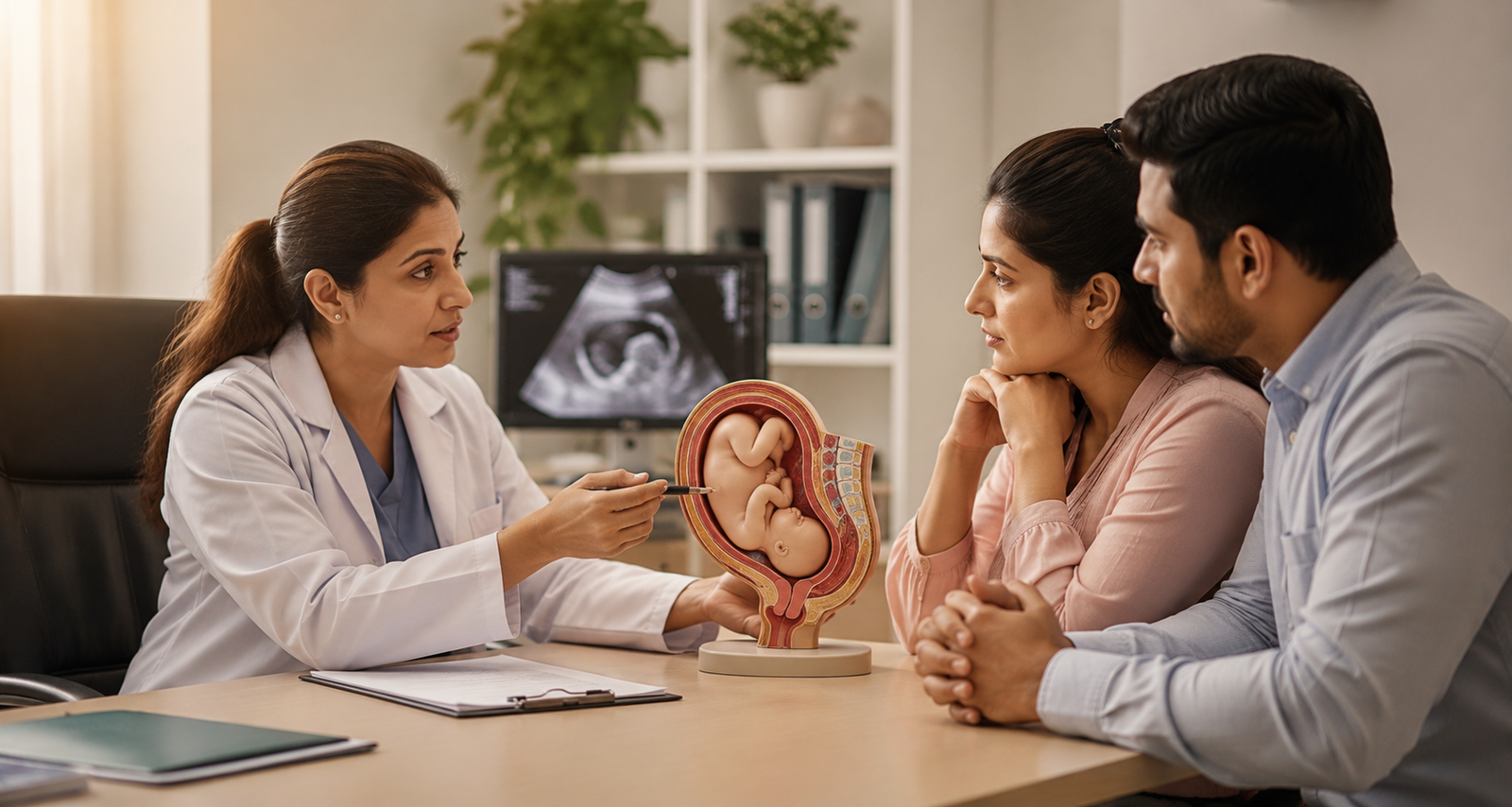
Normal Delivery vs C-Section: How Doctors Decide What Is Safe for Mother and Baby
Many expecting parents hope for a normal delivery. This is natural, because vaginal birth usually means faster recovery, shorter hospital stay and no surgical wound. But in pregnancy, the safest delivery is not always the same for every mother.
A good normal delivery hospital should not simply promise normal delivery to everyone. The right approach is to support normal delivery whenever it is safe, monitor mother and baby carefully, and recommend a C-section only when it becomes the safer choice.
The final goal is not just “normal delivery” or “C-section”. The goal is a safe birth, a healthy mother and a healthy baby.
Why Doctors Cannot Decide Delivery Type Too Early?
Some delivery decisions can be planned before labour starts. For example, if the placenta is covering the cervix, if the baby is lying sideways, or if there are certain previous uterine scars, a planned C-section may be safer.
But many decisions are made during labour. A pregnancy may look low-risk until the final weeks, but the plan can change if labour does not progress, the baby’s heartbeat becomes concerning, or the mother develops complications.
That is why doctors usually look at the full picture: mother’s health, baby’s position, placenta location, previous pregnancy history, ultrasound findings, labour progress and fetal monitoring.
When Normal Delivery Is Usually Preferred?
Normal delivery is usually preferred when the pregnancy is low-risk, the baby is head-down, the placenta is not blocking the birth canal, and both mother and baby are stable.
For many mothers, normal delivery may allow quicker movement, easier early bonding, earlier breastfeeding and a shorter hospital stay. It also avoids abdominal surgery, which can be important for recovery and future pregnancies.
However, normal delivery is not just about “waiting for labour”. It requires regular pregnancy checkups, proper monitoring, labour support and the ability to act quickly if something changes.
When a C-Section May Be Safer?
A C-section is not a failure. In many cases, it is a life-saving and responsible medical decision.
Doctors may recommend a C-section if the placenta is covering the cervix, the baby is not in a safe position, labour is not progressing, the baby’s heartbeat suggests distress, or there is a risk related to a previous C-section or uterine surgery.
A C-section may also be needed in emergencies such as heavy bleeding, cord problems, severe fetal distress or sudden complications during labour.
The important thing is timing. An unnecessary C-section should be avoided, but a necessary C-section should not be delayed.
Normal Delivery vs C-Section: Simple Comparison
| Point | Normal Delivery | C-Section |
| Recovery | Usually faster | Usually slower because it is surgery |
| Hospital stay | Often shorter | Often longer |
| Pain pattern | Labour pain before birth | Surgical wound pain after birth |
| When preferred | Low-risk pregnancy, stable mother and baby | When vaginal birth may be unsafe |
| Future pregnancy impact | Usually fewer surgical risks | Repeat C-section or scar-related risks may need planning |
| Main advantage | Natural birth process and quicker recovery | Can be safer in specific medical situations |
Both methods can be safe when chosen for the right reason. The decision should be based on medical assessment, not fear, pressure or myths.
Common Situations Families Ask About
Previous C-Section
A previous C-section does not always mean the next delivery must also be a C-section. Some women may be suitable for vaginal birth after C-section, but this depends on the type of previous scar, reason for the earlier C-section, current pregnancy condition and hospital readiness.
This decision should always be made after a detailed consultation with an obstetrician.
Breech Baby
If the baby is breech, meaning bottom or feet first, doctors may discuss options depending on the stage of pregnancy and safety factors. In many cases, a planned C-section is considered safer, especially if the baby remains breech close to delivery.
Labour Not Progressing
Sometimes labour starts normally but slows down or stops progressing. Doctors do not usually rush to surgery if labour is slow but still progressing. However, if labour does not progress despite proper care, or if mother or baby shows signs of distress, a C-section may become necessary.
Baby’s Heartbeat Changes
During labour, the baby’s heartbeat is monitored. If the pattern suggests that the baby may not be tolerating labour well, doctors may first try corrective steps. If the concern continues, an urgent C-section may be advised.
How to Choose a Normal Delivery Hospital
If you are searching for a normal delivery hospital near you, do not choose only by promises or package claims. Choose a hospital that explains both normal delivery and C-section honestly.
A good maternity hospital should have experienced obstetricians, labour monitoring, emergency C-section readiness, newborn care support and clear communication with the family.
The best hospital is not the one that promises only one type of delivery. It is the one that supports normal delivery when safe and takes quick action when medical safety demands it.
Myths About Normal Delivery and C-Section
Normal delivery is always safe.
Fact: Normal delivery is usually preferred in low-risk pregnancies, but it may not be safe in every situation.
C-section means the mother did not try enough.
Fact: C-section is often done to protect the mother, baby or both. It should not be seen as failure.
Doctors can always predict delivery type in advance.
Fact: Some risks can be predicted, but many delivery decisions depend on what happens during labour.
Once C-section, always C-section.
Fact: Not always. Some women may be suitable for vaginal birth after C-section, but only after proper medical evaluation.
Delivery Care at Nulife Hospitals
At Nulife Hospitals, Department of Obstetrics & Gynaecology focuses on safe, ethical and evidence-based maternity care. We support normal delivery whenever it is safe, while keeping mother and baby’s health as the first priority.
For expecting parents in Delhi, a delivery planning consultation can help you understand your options, possible risks, hospital readiness and the safest plan for birth.
Medical disclaimer: This article is for patient education only and should not replace consultation with your obstetrician. Delivery decisions depend on individual pregnancy condition, reports, labour progress and doctor’s assessment.
Medically reviewed by: Department of Obstetrics & Gynaecology, Nulife Hospitals
Last updated: July 2026