Whether you are a professional athlete or a weekend warrior, the adrenaline of the game is often accompanied by the risk of injury. At NuLife Hospital, our Sports Injuries and Medicine department sees hundreds of athletes who share a common goal: getting back to the activity they love as safely and quickly as possible.
Understanding the nature of sports injuries—and knowing how to react in the immediate aftermath—can be the difference between a minor setback and a career-ending complication.
The “Big Three”: Common Sports Injuries
While sports injuries can affect any part of the body, three specific conditions frequently bring patients to our clinic:
1. ACL Tears (Anterior Cruciate Ligament)
The ACL is one of the key ligaments that help stabilize your knee joint. It is most commonly injured during sports that involve sudden stops or changes in direction—such as football, basketball, or skiing. A “pop” in the knee followed by severe swelling and instability are classic signs of an ACL injury.
2. Rotator Cuff Tendonitis
Common in sports requiring repetitive overhead motions (like tennis, swimming, or cricket), the rotator cuff is a group of muscles and tendons that keep the head of your upper arm bone firmly in your shoulder socket. Inflammation here causes a dull ache in the shoulder, which often worsens when you move your arm away from your body.
3. Ankle Sprains
Perhaps the most common injury in all of sports, a sprain occurs when the ligaments that support the ankle stretch beyond their limits and tear. While often dismissed as “minor,” an improperly healed sprain can lead to chronic ankle instability.
Immediate Response: The R.I.C.E. Method
In the first 48 hours after an injury, your primary goal is to control inflammation. At NuLife, we recommend the R.I.C.E. protocol as the gold standard for initial home care:
- Rest: Protect the injured area. Stop the activity immediately and avoid putting weight on the limb.
- Ice: Apply cold packs for 15–20 minutes every few hours. This constricts blood vessels and significantly reduces swelling and pain.
- Compression: Wrap the injured area with an elastic medical bandage. This helps “squeeze” the inflammation out of the joint.
- Elevation: Keep the injured area raised above the level of your heart to help drain fluid away from the site.
When “Home Care” Isn’t Enough
How do you know when a sprain is actually a fracture, or when a “sore shoulder” requires surgery? You should visit the specialists at NuLife Hospital if you experience:
- Inability to bear weight: If you cannot take more than four steps without significant pain.
- Visible Deformity: If the joint looks out of place or “wrong.”
- Numbness or Tingling: This may indicate nerve involvement.
- Persistent Instability: If your knee or ankle feels like it is “giving way.”
The Path to Recovery at NuLife Hospital
Recovery is not just about healing the bone or ligament; it’s about restoring performance. Our approach at NuLife Hospital involves a three-stage recovery plan:
Phase 1: Pain Management & Protection
We utilize advanced diagnostics, including high-resolution MRI and ultrasound, to pinpoint the exact degree of tissue damage. If surgery is required—such as a minimally invasive arthroscopic ACL reconstruction—our surgeons use the latest techniques to minimize scarring and speed up healing.
Phase 2: Physiotherapy & Rehabilitation
Our specialized Physiotherapy and Rehabilitation wing works with you to regain range of motion. We use modern modalities like Shockwave Therapy and Laser Therapy to stimulate cellular repair, alongside manual therapy to break down scar tissue.
Phase 3: Sports-Specific Training
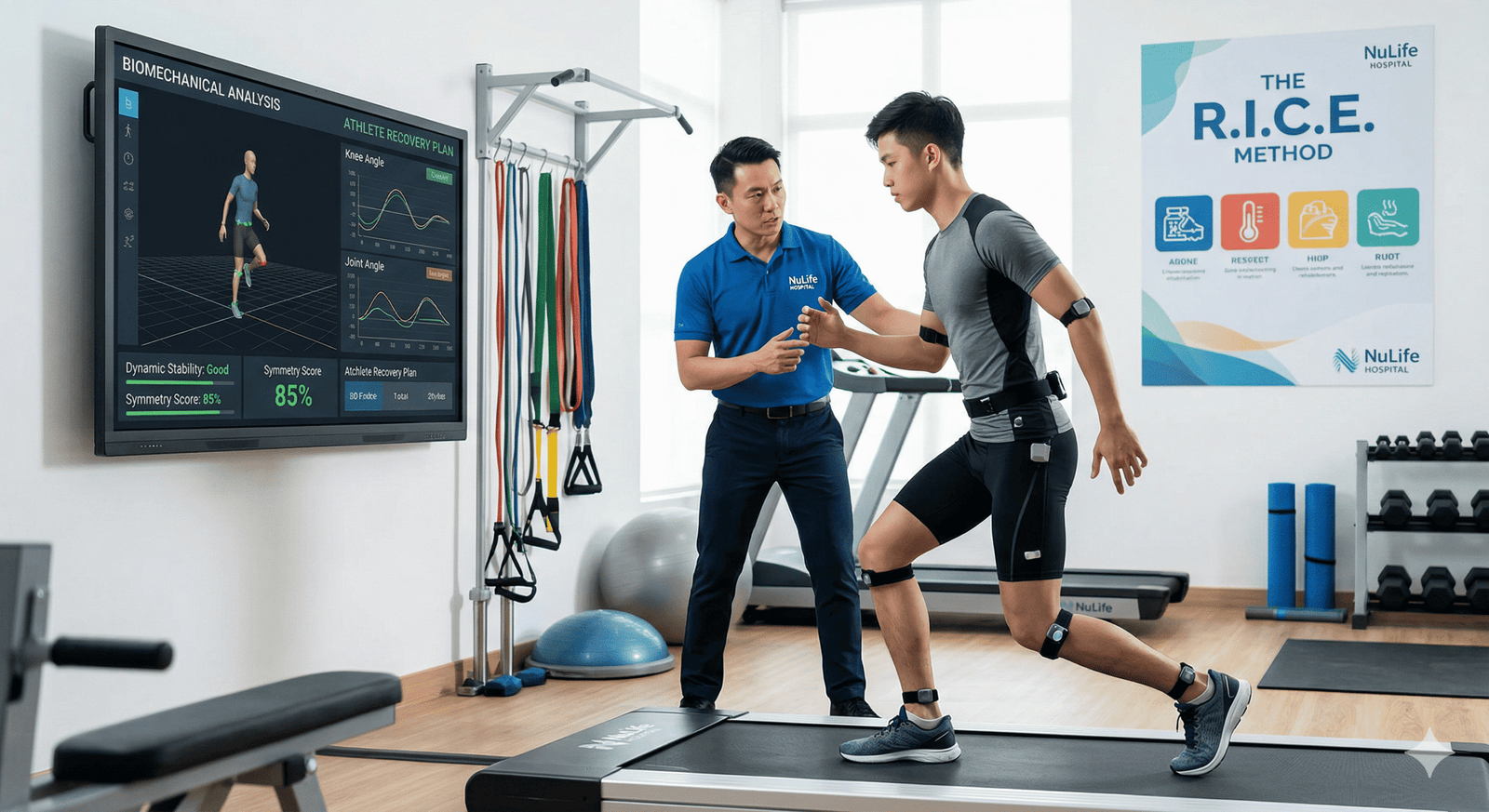
Before we clear you for the field, we perform functional testing. This ensures your strength, balance, and agility are back to 100%. We also analyze your biomechanics to identify why the injury happened in the first place, helping you adjust your technique to prevent a recurrence.
Prevention: The Best Medicine
To stay off our operating tables and on the field, remember these three rules:
- Warm-up: Never sprint on “cold” muscles.
- Listen to your body: Pain is a signal, not a challenge to be overcome.
- Cross-train: Strengthening the muscles around your joints (like your quads for knee protection) is your best defense.
Don’t let an injury keep you on the sidelines. If you’ve suffered a sports-related setback, the expert team at NuLife Hospital is here to help you make a comeback.
Disclaimer: Information on this site is for general purposes only and may not be current. Always consult a healthcare professional before making health decisions based on this information.