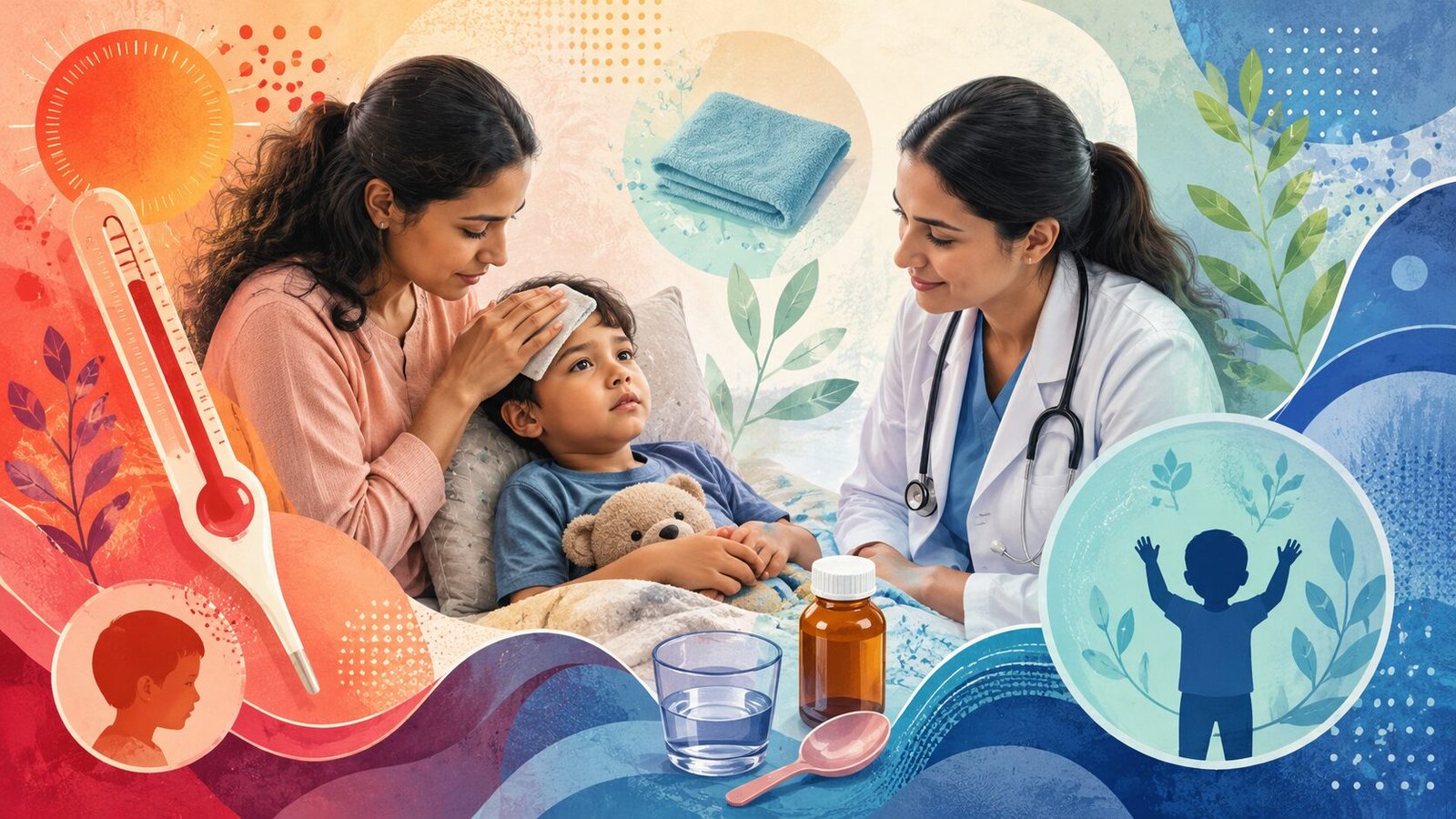
A fever in children can be worrying for any parent, especially when it appears suddenly or rises during the night. However, fever itself is not a disease. It is usually the body’s natural response to an infection or another underlying condition.
Most childhood fevers improve without complications. What matters is not only the temperature shown on the thermometer, but also the child’s age, activity, breathing, fluid intake and overall behaviour. Parents can also refer to the Indian Academy of Pediatrics guidelines for parents for general child-health guidance.
Parents should therefore observe the child rather than focusing only on bringing the temperature down. This article explains the common causes of fever in children, the warning signs that need medical attention and when to consult a pediatrician.
What Is Considered Fever in Children?
A child is generally considered to have a fever when the measured body temperature reaches 38°C or above. Temperature can vary depending on the measurement method, time of day and the child’s recent activity.
For babies and young children, an electronic thermometer used correctly is more reliable than simply touching the forehead. In children under five, recognised measurement methods include an electronic thermometer in the armpit and, where suitable, an infrared ear thermometer.
A high number on the thermometer does not always mean that the illness is serious. In children older than six months, healthcare professionals do not assess the risk of serious illness using temperature alone. The child’s breathing, responsiveness, hydration and other symptoms are equally important.
What Commonly Causes Fever in Children?
In most cases, fever occurs because the immune system is responding to an infection. In Delhi, seasonal changes, school exposure, pollution-related respiratory irritation and the monsoon period can contribute to an increase in childhood illnesses, although a medical examination may be needed to identify the actual cause.
Viral infections
Viral infections are among the most common causes of fever in children. A child may also experience a runny nose, cough, sore throat, body ache, tiredness, vomiting or loose stools.
Many viral illnesses improve with time and supportive care. Antibiotics do not treat viral infections and should not be given without a doctor’s advice.
Throat, ear and chest infections
Fever accompanied by throat pain, earache, persistent cough, fast breathing or difficulty breathing may be associated with an infection of the throat, ear or lungs.
Pneumonia should be considered when fever occurs with unusually fast breathing, chest indrawing, nasal flaring, grunting or bluish discolouration.
Stomach and intestinal infections
Vomiting, loose stools and stomach discomfort can occur alongside fever. The main concern in young children is dehydration, particularly when the child is unable to drink or is passing much less urine than usual.
Urinary tract infections
A urinary tract infection may cause fever without obvious cold or cough symptoms. Some children may develop pain while passing urine, frequent urination, stomach pain, foul-smelling urine or new bedwetting. Babies may only show fever, poor feeding or irritability.
Mosquito-borne and seasonal infections
Conditions such as dengue, malaria and other seasonal infections must also be considered in Delhi, depending on the time of year, symptoms and possible exposure.
These illnesses cannot be reliably identified from fever alone. A pediatrician may recommend an examination and, where medically appropriate, further tests.
Look at the Child, Not Just the Thermometer
Parents naturally focus on whether the temperature is 101°F, 102°F or higher. However, a child’s overall condition often provides more useful information.
A child who is drinking fluids, responding normally, making eye contact and becoming active between fever episodes may be less concerning than a child with a lower temperature who is unusually sleepy, breathing rapidly or refusing all fluids.
Important observations include whether the child:
- Responds and interacts normally,
- Drinks fluids or breastfeeds,
- Passes urine regularly,
- Breathes comfortably,
- Wakes normally,
- Develops a rash or seizure,
- Appears to be getting better or worse.
The temperature should still be measured and recorded, but it should be considered along with these signs.
Warning Signs During Fever in Children
Seek urgent medical assessment when a child with fever appears seriously unwell, has difficulty breathing, is difficult to wake, does not respond normally, develops a stiff neck or has a rash that does not fade when pressed.
Other concerning signs include bluish, grey, very pale or blotchy skin, continuous crying, confusion, repeated vomiting, severe dehydration or a seizure.
Fever in babies below three months
A baby younger than three months with a temperature of 38°C or above should be medically assessed urgently. Young infants can become unwell quickly and may not show the usual signs seen in older children.
Fever with breathing difficulty
Do not delay medical attention if the child is breathing very fast, grunting, struggling to breathe or if the skin appears to pull inward below the ribs.
Fever with a non-fading rash
A rash that does not fade when gently pressed can be associated with a serious illness and requires urgent assessment. Such changes may be more difficult to notice on darker skin, so the palms, soles and inside the eyelids should also be observed.
Fever lasting five days or longer
A child whose fever continues for five days or more should be examined. Persistent fever may require evaluation for a specific infection or an inflammatory condition such as Kawasaki disease.
What Are Febrile Seizures or Fever Fits?
A febrile seizure is a seizure associated with fever, usually occurring in young children. During an episode, the child may become stiff, shake, roll the eyes or briefly lose awareness.
Although many febrile seizures do not cause lasting harm, seeing one can be extremely frightening. A child experiencing a seizure for the first time should receive emergency medical attention. The Indian Academy of Pediatrics parent guidelines also include guidance on fever and febrile seizures.
Parents should not place a spoon, finger, medicine or any other object inside the child’s mouth. The child should be kept away from nearby objects that could cause injury, and urgent medical help should be sought.
A seizure lasting several minutes, repeated seizures, breathing difficulty or failure to recover normally requires immediate emergency care.
Caring for a Child With Fever at Home
When a child has no warning signs and a healthcare professional considers home observation appropriate, the priority is comfort and hydration.
Offer breastfeeds, water or other age-appropriate fluids regularly. Dress the child comfortably rather than wrapping them in excessive layers. Check the child periodically, including during the night, and observe urine output, breathing and alertness.
Fever-reducing medicine should not be used simply to achieve a normal thermometer reading. Medicine may be considered when the child is uncomfortable, but the appropriate product and dose depend on age, weight, medical history and other factors.
Do not give antibiotics or combine medicines without medical advice. Aspirin should not be given to children under 16 years of age.
When Should You Consult a Pediatrician?
A pediatric consultation is advisable when the cause of fever is unclear, the child is not improving, symptoms keep returning or the parent feels that the child is behaving differently from usual.
You should also arrange an assessment when the child has poor feeding, reduced urination, persistent cough, ear pain, pain while passing urine, repeated vomiting, severe throat pain or fever lasting five days.
Parents should trust their judgement. If your child appears less well than before, or you are becoming more worried despite earlier advice, seek medical attention again.
For families in Delhi, timely assessment by a pediatrician can help identify whether the fever is caused by a routine viral illness or requires further examination, monitoring or testing.
Frequently Asked Questions About Fever in Children
Is 102°F a dangerous fever for a child?
A temperature of 102°F is not automatically dangerous. The child’s age, breathing, hydration, alertness and accompanying symptoms are also important. A child who appears very unwell should be assessed even when the temperature is lower.
When should a child with fever be taken to the hospital?
Seek urgent medical attention if the child has difficulty breathing, is difficult to wake, develops a seizure, has a stiff neck, shows signs of severe dehydration or develops a rash that does not fade when pressed. A baby below three months with a temperature of 38°C or above also needs urgent assessment.
Why does my child’s fever keep returning?
Recurrent fever can occur with repeated viral infections, particularly in children attending school or daycare. However, frequent or prolonged episodes may need pediatric evaluation, especially when accompanied by poor growth, unusual rashes, persistent tiredness or other concerning symptoms.
Can teething cause high fever in children?
Teething may cause mild discomfort and a small rise in temperature, but a significant or persistent fever should not automatically be attributed to teething. Other possible causes may need to be assessed by a pediatrician.
Are antibiotics needed whenever a child has fever?
No. Many childhood fevers are caused by viral infections, and antibiotics do not treat viruses. Antibiotics should only be given when prescribed by a doctor for a suspected or confirmed bacterial infection.
What is a febrile seizure or fever fit?
A febrile seizure is a seizure associated with fever, usually in young children. The child may become stiff, shake or briefly lose awareness. A first seizure, a prolonged seizure or failure to recover normally requires urgent medical attention.
How long can fever last in children?
The duration depends on the cause. Many viral fevers improve within a few days, but a fever lasting five days or longer should be medically assessed. Earlier consultation is needed when warning signs are present.
Final Note for Parents
Fever in children is common, but every child and every illness can present differently. Instead of watching only the temperature, observe how the child is breathing, drinking, responding and behaving.
When warning signs are present, or when you simply feel that something is not right—do not delay consultation with a pediatrician.
Pediatric Care at Nulife Hospitals
At Nulife Hospitals, the Department of Paediatrics evaluates fever in children, recurrent infections, cough, breathing problems, poor feeding, dehydration and other common childhood health concerns.
If your child has persistent fever, unusual sleepiness, reduced fluid intake, breathing difficulty, repeated vomiting or symptoms that are getting worse, a pediatric consultation can help identify the cause and guide the appropriate next steps.
Book an appointment with the Nulife Paediatrics Department for fever evaluation and comprehensive pediatric care in Delhi.
Medical Disclaimer: This article is for parent and patient education only and should not replace consultation with a qualified pediatrician. Do not give antibiotics, combine fever medicines or change a child’s medication without medical advice. Evaluation and treatment depend on the child’s age, weight, symptoms, medical history, hydration, examination findings and other health factors.
Medically reviewed by: Department of Paediatrics, Nulife Hospitals
Last updated: August 2026